LED Advertising Ideas for Retail Stores: Creative Ways to Attract More Customers
Retail stores face strong competition when attracting customers and promoting products. From clothing shops and electronics stores to supermarkets and jewellery showrooms, every retailer needs effective ways to capture attention and communicate offers. Traditional banners and printed posters can be useful, but they offer limited flexibility when promotional messages change frequently.
LED advertising for retail stores provides a dynamic way to display product images, promotional videos, seasonal offers, new arrivals, and brand messages. With the right content and screen placement, retailers can make their storefronts more noticeable and create a more engaging shopping experience.
In this guide, we explore practical LED advertising ideas for retail stores, explain how different businesses can use LED displays, and share tips for creating effective digital advertising campaigns.
What Is LED Advertising for Retail Stores?
LED advertising uses digital LED screens to showcase advertisements, products, promotions, and business information. Retailers can display images, videos, animations, prices, and promotional messages depending on the screen and content management system.
For example, a clothing store can showcase its latest collection, while an electronics shop can highlight product features and special offers. A supermarket can promote discounts on selected products, and a jewellery showroom can display high-quality visuals of its collections.
LED displays can be installed inside stores, near entrances, in storefront windows, or in suitable outdoor locations. The right choice depends on viewing distance, lighting conditions, available space, and the retailer’s marketing objectives.
To understand LED display types, applications, and business benefits in more detail, explore our main guide: LED Advertising: A Complete Guide for Businesses.
7 Creative LED Advertising Ideas for Retail Stores
1. Display Daily Offers and Special Discounts
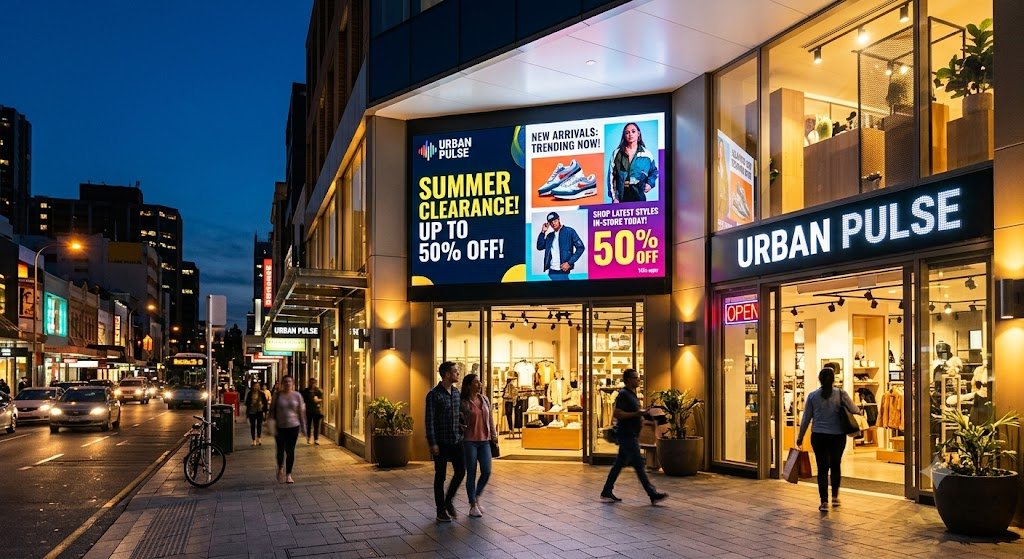
One of the simplest ways to use an LED screen is to promote special offers and discounts. Retailers can highlight seasonal sales, weekend offers, limited-time deals, and festive promotions.
For example, a clothing store can display messages such as “Festive Collection Now Available” or “Special Discounts on Selected Styles.” A supermarket can showcase daily deals on groceries and household products.
Digital displays make it possible to update promotional messages without printing a new banner for every campaign. Keep the offer, product image, and call to action clear so customers can understand the message quickly.
Best for: Clothing stores, supermarkets, footwear shops, and electronics retailers.
2. Showcase New Arrivals and Trending Products
Customers often want to discover new products before entering a store. An LED display can showcase new arrivals through high-quality images, short product videos, and simple product highlights.
A fashion retailer can display new outfits, seasonal collections, and styling ideas. An electronics store can showcase new smartphones, televisions, or accessories.
Use attractive visuals and focus on one product category at a time. Avoid filling the screen with too many product images or lengthy descriptions.
This approach can help retailers communicate what is new in the store and encourage interested customers to explore the products in person.
Best for: Fashion boutiques, mobile shops, electronics showrooms, and lifestyle stores.
3. Create an Attractive Storefront Display
Your storefront is often the first point of contact between your business and potential customers. A strategically positioned LED display can help communicate your brand identity and attract attention from people passing by.
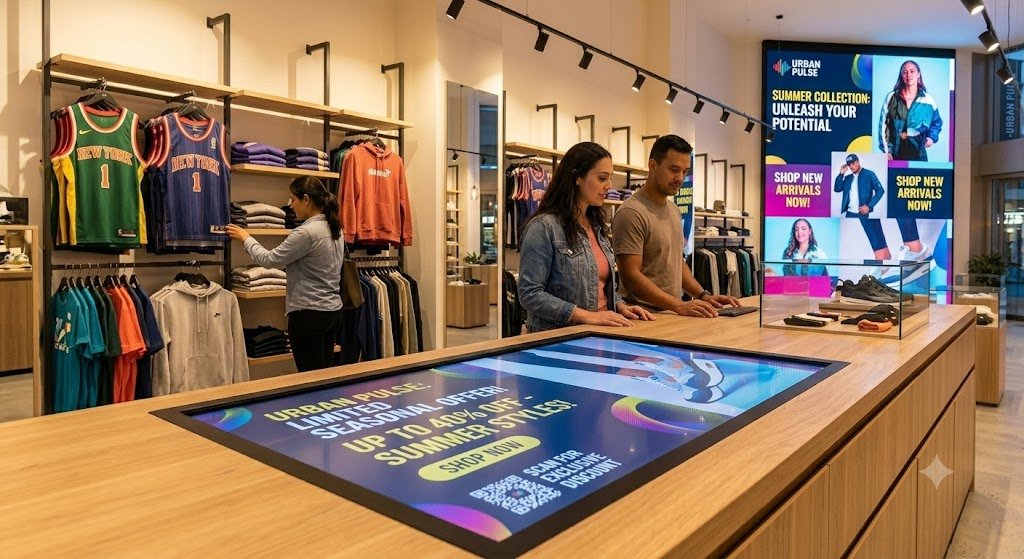
Retailers can use storefront screens to display brand videos, product highlights, store announcements, and seasonal campaigns.
For example, a bakery can showcase fresh cakes and pastries, while a cosmetics store can display product collections and beauty-related visuals.
For outdoor installations, select a screen designed for the environmental conditions and ensure that brightness, viewing distance, and placement are appropriate. Follow applicable local advertising and installation regulations.
Best for: Shopping streets, standalone retail shops, showrooms, and commercial outlets.
4. Promote Festival and Seasonal Campaigns
Festivals and seasonal shopping periods create opportunities for retailers to promote relevant products and special collections.
An LED advertising screen can display campaigns for Diwali, Christmas, Eid, New Year, wedding seasons, and end-of-season sales. Retailers can change their creative content as campaigns evolve.
For example, a jewellery store can showcase festive collections before Diwali, while a gift shop can promote gift boxes and decorations before major celebrations.
Use festive colours and relevant visuals while maintaining your brand identity. Ensure that promotional prices, terms, and offer dates are accurate.
Best for: Jewellery shops, gift stores, clothing retailers, home décor stores, and supermarkets.
5. Highlight Product Benefits and Demonstrations
Some products need more explanation before customers decide to purchase them. LED displays can help retailers communicate product benefits through short demonstrations, comparison visuals, and instructional videos.
An electronics retailer can demonstrate product features, while a home appliance showroom can showcase how an appliance works. A furniture store can display product designs and examples of how furniture fits into different spaces.
Keep demonstrations short and focus on benefits that matter to your target audience. If the screen has no audio or customers are viewing it from a distance, use readable on-screen text and clear visuals.
Best for: Electronics shops, furniture showrooms, home appliance stores, and specialty retailers.
6. Use LED Screens for In-Store Promotions
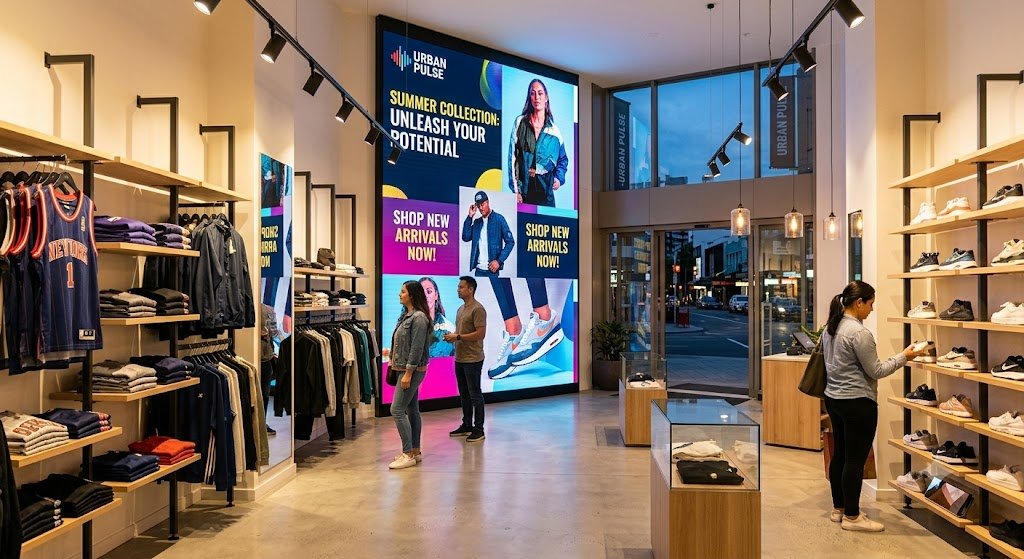
LED advertising is not limited to attracting people from outside. Indoor screens can help retailers highlight offers, communicate product categories, and guide customer attention within the store.
A supermarket can promote selected product categories, while a clothing store can highlight accessories that complement its main collections. A cosmetics retailer can showcase product ranges or demonstrate how products are used.
Place the display where shoppers can view it without obstructing aisles, entrances, or emergency exits. Keep the content relevant to the products available in that area.
Best for: Supermarkets, department stores, cosmetics shops, and large retail outlets.
7. Strengthen Brand Awareness with Consistent Visuals
Consistent branding helps customers recognise a business across different marketing channels. Retailers can use LED screens to display their logo, brand colours, campaign visuals, and brand messages.
For example, a local fashion brand can maintain a consistent visual identity across its storefront display, Instagram content, and in-store promotions.
Use readable typography, high-quality images, and a consistent colour palette. Instead of changing every element in each advertisement, maintain a recognisable style while refreshing the promotional message.
This strategy can support brand recognition over time, although its impact depends on campaign consistency, audience exposure, and the overall customer experience.
Which LED Display Is Best for a Retail Store?
Choosing the right display depends on where it will be installed and what you want it to achieve.
| LED display type | Suitable application | Main purpose |
|---|---|---|
| Indoor LED screen | Inside a retail shop | Product promotion and in-store offers |
| Outdoor LED screen | Exterior commercial locations | Storefront visibility and promotions |
| LED video wall | Large showrooms and retail spaces | Immersive product visuals |
| Window-facing display | Storefront windows | Communicating offers to passersby |
| Digital signage display | Counters and selected store areas | Product information and announcements |
Before selecting a screen, consider its size, pixel pitch, brightness, viewing distance, installation requirements, electricity consumption, maintenance, and total cost.
For a broader explanation of display options and their business applications, read our complete guide to LED advertising for businesses.
Tips for Creating Effective LED Advertising Content
Installing an LED screen is only one part of a successful advertising strategy. The content displayed on the screen should be relevant, clear, and easy to understand.
Keep Messages Short and Clear
Use concise headlines, readable fonts, and simple calls to action. People passing a store may only have a few seconds to view your advertisement.
Use High-Quality Visuals
Select clear product images and videos that represent your products accurately. Ensure the text and visuals remain legible at the intended viewing distance.
Match Content to Your Target Audience
Understand your customers’ needs and preferences. A children’s clothing store may use colourful product visuals, while a premium jewellery showroom may prefer elegant and minimal designs.
Update Promotions Regularly
Refresh advertisements when products, offers, seasons, or campaigns change. Ensure that expired promotions are removed promptly.
Measure Your Results
Track relevant indicators such as promotional enquiries, coupon redemptions, QR-code scans, store visits where measurable, and sales during campaigns. Compare results against a suitable baseline to understand whether your advertising is contributing to business goals.
LED Advertising vs Traditional Retail Advertising
Both LED advertising and printed materials have a role in retail marketing.
| Feature | LED advertising | Printed advertising |
|---|---|---|
| Content updates | Digital content can be changed | Reprinting may be required |
| Content format | Images, videos, animations, and text | Mainly static images and text |
| Multiple promotions | Can rotate different advertisements | Usually requires separate materials |
| Initial cost | Higher when purchasing and installing a screen | Often lower for simple banners |
| Maintenance | Electricity and equipment maintenance may apply | Replacement and printing costs may apply |
LED advertising can be useful when retailers frequently update promotions or need dynamic product visuals. Printed banners may be more practical for fixed messages and businesses with limited budgets.
The best option depends on your marketing objectives, location, budget, and expected return on investment.
How Dynamic LED Screen Solutions Can Support Retail Businesses
Choosing an LED display involves understanding your store layout, audience, viewing distance, content requirements, and budget. The right solution should match the business’s practical needs rather than simply focusing on screen size.
Dynamic LED Screen Solutions provides a starting point for businesses exploring LED display applications. Retailers interested in storefront advertising, indoor promotions, or larger display installations can review the website and enquire about suitable options.
Visit Dynamic LED Screen Solutions to explore LED display solutions for your business.
Before investing, discuss screen specifications, installation, content management, maintenance, and after-sales support with your provider.
Frequently Asked Questions (FAQs)
1. What are the best LED advertising ideas for retail stores?
Popular ideas include displaying special offers, showcasing new arrivals, promoting festive campaigns, demonstrating product features, creating storefront displays, and highlighting in-store promotions.
2. Can LED advertising help attract more retail customers?
LED advertising can improve the visibility of promotions and products. However, the actual impact on customer visits and sales depends on screen placement, content quality, pricing, audience needs, and other marketing factors.
3. Are LED screens suitable for small retail shops?
Yes. Small retailers can consider appropriately sized displays based on their available space, budget, viewing distance, and promotional requirements. A smaller screen may be sufficient for a compact shop.
4. How much does an LED advertising screen cost?
The cost varies according to screen size, pixel pitch, indoor or outdoor specifications, brightness, installation complexity, and other requirements. Request a quotation based on your intended application.
5. How often should retail stores update LED advertising content?
Update content whenever offers expire, new products arrive, or seasonal campaigns change. Regularly review the screen to ensure that the displayed information remains accurate and relevant.
Conclusion
LED advertising offers retail stores a flexible way to showcase products, promote discounts, improve storefront visibility, and communicate brand messages. From festive campaigns and new-arrival promotions to product demonstrations and in-store advertising, retailers can use LED screens in several practical ways.
To get the most from LED advertising, select a suitable display, understand your audience, create clear and engaging content, and measure campaign performance. Consider the complete cost of installation and maintenance before making an investment.
If you want to learn more about LED advertising types, applications, and business benefits, explore our LED Advertising: A Complete Guide for Businesses.
Ready to explore LED advertising for your retail store? Visit Dynamic LED Screen Solutions to learn more.